Books That Made Me Want to Start Writing: 12 Reads That Put a Pen in Your Hand
Bookdot Team • •
#books about writing#books that inspire writers#On Writing#Bird by Bird#creative writing#BookTok
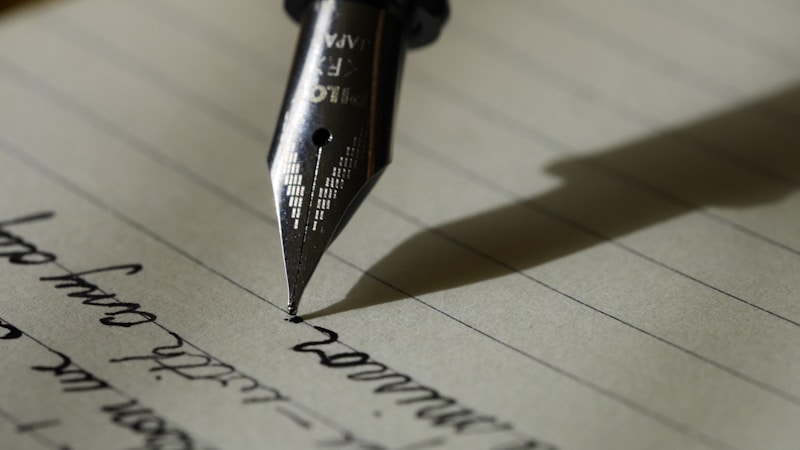
It usually happens around the last chapter. You close a book, and instead of reaching for the next one, you find yourself looking for a notebook. Not to review the book. To write something of your own.
Readers talk a lot about the book hangover, that hollow feeling when a story ends. This is its more productive cousin. You are not mourning the characters so much as feeling the pull of the sentence itself, the sense that someone built this out of words and that you might be able to build something too.
If you have ever had that itch and ignored it, this list is for you. These twelve books are the ones that made readers reach for a pen, from craft guides and memoirs to novels about people who write. They are not all about technique. Most of them are about courage.
Almost every writer starts as a reader. The two habits feed each other, and the jump from one to the other is shorter than most people think.
When you read closely, you start noticing choices. Why did the author open on that detail? Why does this paragraph break here? Once you see the choices, you begin to imagine making different ones. That is the beginning of a writer’s ear.
There is also the simple matter of envy, the useful kind. A sentence lands so well you read it three times, and the thought arrives uninvited: I want to be able to do that. You do not need to be good yet. You only need the wanting.
The books below work on that wanting. Some lower the stakes so starting feels possible. Some hand you tools. A few simply show you a life organized around words and let you decide whether you want it.
The biggest obstacle for a new writer is rarely talent. It is the fear of writing badly. These four books speak to that fear directly.
Bird by Bird (1994) by Anne Lamott takes its title from a story about her father. Her older brother, ten years old, had a report on birds due and had put it off for three months. He sat at the kitchen table, overwhelmed, until their father put an arm around him and said to take it bird by bird. That is the book’s whole method: do the next small thing. Lamott is also famous for defending the “shitty first draft,” arguing that every good piece of writing begins as one. If perfectionism keeps you from starting, read this first.
Big Magic (2015) by Elizabeth Gilbert, the author of Eat, Pray, Love, is less a craft manual than a pep talk about living creatively without being ruled by fear. Gilbert treats ideas as something that visit you and look for a willing collaborator, a notion you can take literally or poetically. Her real message is that you do not need to suffer for your art or quit your job to deserve a creative life. It is a warm, slightly sassy book, and it works best when you feel you are too late or not serious enough.
The Artist’s Way (1992) by Julia Cameron is built around two practices. The first is morning pages, three pages of longhand writing done first thing every day, with no editing and no audience. The second is the artist date, a weekly solo outing meant to refill your imagination. The book is organized as a twelve-week course, and plenty of readers swear by it. Others find its spiritual language heavy. Either way, morning pages are one of the most effective ways to get words moving.
Writing Down the Bones (1986) by Natalie Goldberg grew out of her years teaching writing workshops and practicing Zen. The core idea is “writing practice”: set a timer, keep your hand moving, and do not stop to judge. The chapters are short, usually two or three pages, so you can read one over coffee and write right after. It is the easiest book here to dip into when you only have ten minutes.
Once you are past the fear, you start wanting to know how it works. These three books answer that.
On Writing: A Memoir of the Craft (2000) by Stephen King is half autobiography, half workshop. The first section covers his childhood, his early rejections, and his years of drinking. The second lays out his advice, including the image of a writer’s toolbox, with vocabulary on top and grammar beneath it. He is blunt that if you want to be a writer, you must read a lot and write a lot. King also describes the 1999 accident that nearly killed him and how returning to the page helped him recover. It is the most requested book on this list for a reason: it is practical, funny, and unafraid of its own opinions.
Zen in the Art of Writing (1990) by Ray Bradbury collects essays on his creative life. He writes about feeding your mind with poetry, essays, and fiction every day, and about writing from enthusiasm rather than dread. One of the best-known anecdotes is how he wrote the first draft of Fahrenheit 451 on a rented typewriter in the basement of UCLA’s Powell Library, paying by the half hour. The book is short, giddy, and contagious. You finish it wanting to write a story tonight.
Several Short Sentences About Writing (2012) by Verlyn Klinkenborg is the quiet, severe one. Klinkenborg, a longtime writer for The New York Times, teaches by example, often in short paragraphs and single-line sections. His central lesson is that most bad sentences come from writers who stopped paying attention to their own sentences. It will not make you feel cozy. It will make you rewrite the email you were about to send.
These next three are about what it means to organize a life around words. They are the most literary books here, and the ones you will probably reread.
The Writing Life (1989) by Annie Dillard, who won the Pulitzer Prize for Pilgrim at Tinker Creek, is a slim book of vivid, strange reflections on a writer’s days. She describes the work as demanding, solitary, and a little absurd, and she writes about it with the intensity of someone who has paid for every page. It contains the line “How we spend our days is, of course, how we spend our lives,” which many readers copy into their planners. Read it when you want to take the work seriously.
A Room of One’s Own (1929) by Virginia Woolf grew out of two lectures Woolf gave at women’s colleges at Cambridge in 1928. Her argument is that a woman needs money and a room of her own to write fiction. Along the way she invents Judith Shakespeare, an imagined sister of William with equal gifts and none of his opportunities. It is an essay, but it moves like a novel, and it changes how you think about the conditions that make art possible. If you have ever wondered what you need to write, start here.
Letters to a Young Poet (1929, compiled from letters written 1903 to 1908) by Rainer Maria Rilke collects ten letters sent to Franz Xaver Kappus, a young military cadet who wrote to Rilke for advice on his poems. Rilke’s answer, over and over, is to stop seeking approval and ask yourself whether you must write. It is a tiny book, and a gentle one. It suits readers who are asking the large questions about why they want to write at all.
You do not need a how-to to feel the itch. Sometimes a character does the work.
Little Women (1868) by Louisa May Alcott gave generations of girls their first picture of a writer. Jo March scribbles melodramas in the attic, sells stories to newspapers, and defends writing as work even when her family worries it is a distraction. Her manuscript is burned by her sister Amy in a fit of anger, and Jo’s grief at losing it is one of the book’s most honest scenes. Many readers can trace their own first stories back to Jo.
Fangirl (2013) by Rainbow Rowell follows Cath Avery, a college freshman who is enormously popular as a writer of Simon Snow fan fiction and terrified of everything else. When her fiction class asks for original work, Cath has to find out whether she can write something that belongs to her. If you started with fan fiction, or know someone who did, this is the book that treats that route as legitimate. It is also a love letter to the fear of being seen on the page.
The urge to write fades faster than most readers expect. Here is how to catch it while it lasts.
Start small and make it embarrassingly easy. Ten minutes, a timer, one page. Goldberg and Cameron both build their methods on this, and Lamott’s bird-by-bird approach is the same idea with a nicer story attached.
Write while the book is still fresh. The days right after finishing something good are when your ear is most tuned. Copy out a favorite paragraph by hand, then write one of your own in the same rhythm. It is an old exercise and it works.
Keep a record of what moved you. A reading log with a line about what you loved, such as an opening, a voice, or a structure, becomes a private writing course over time. When you notice that three of your favorite books start in the middle of a scene, you have learned something no manual could teach.
Do not wait to feel ready. None of these authors did. Every book on this list shows a person who started anyway, and most of them describe starting badly.
Log the books that make you want to write, and keep notes on the sentences that stuck, with Bookdot.

